
During the session on Electronic Dance Music Cultures, one point that deeply resonated with me was our tendency to associate EDM primarily with joy and pleasure today. However, the origins of this culture and genre were actually rooted in seriousness and resistance. Early Disco culture, in particular, was closely tied to the voices and activism of the LGBTQ+ community. This spirit of defiance and equality is especially evident in Madonna’s “Vogue” and “Express Yourself.” In the “Vogue” music video, Madonna cast dancers specifically from the LGBTQ+ community, which remains a landmark moment in pop culture for promoting LGBTQ+ equality.
Within the Techno of that era, Kraftwerk’s Computer World left the deepest impression on me. In contrast to the spirit of resistance and serious social activism, Kraftwerk’s work feels more like atmospheric and world-building descriptions in science fiction. With its steady 4/4 kicks and those “cheap” yet incredibly warm synthesizer tones, it’s easy to hear how they utilized the most experimental technology of the time to bring their imagination to life.
“Disco Sucks” was an anti-disco movement led by rock fans in the late 1970s United States. It effectively ended disco’s mainstream dominance and paved the way for New Wave and Synth-pop. The most notorious moment was the 1979 “Disco Demolition Night” at a Chicago baseball stadium, where thousands of rock fans burned records, eventually sparking a riot. At the time, rock enthusiasts criticized disco as being overly commercial, mechanical, fake, and soulless. However, I believe this movement harbored a subconscious xenophobia, as disco originated within Black, Latino, and LGBTQ+ communities.
This reminds me of the “Anti-Xiaoqingxin” (anti-twee/indie-pop) sentiment in China between 2000 and 2010. It started with rock fans who disliked the “overly refined” folk and pop ballads epitomized by artists like Cheer Chen and Sodagreen. They championed rock music that was loud, angry, rebellious, and “authentic.” In essence, this movement was fueled by a gender-based antagonism. They detested themes of lyricism and romance, seeking instead to dominate the market with radical, defiant music which a stance that, in hindsight, feels quite narrow and shallow.
Composition and raw recording for Echoes
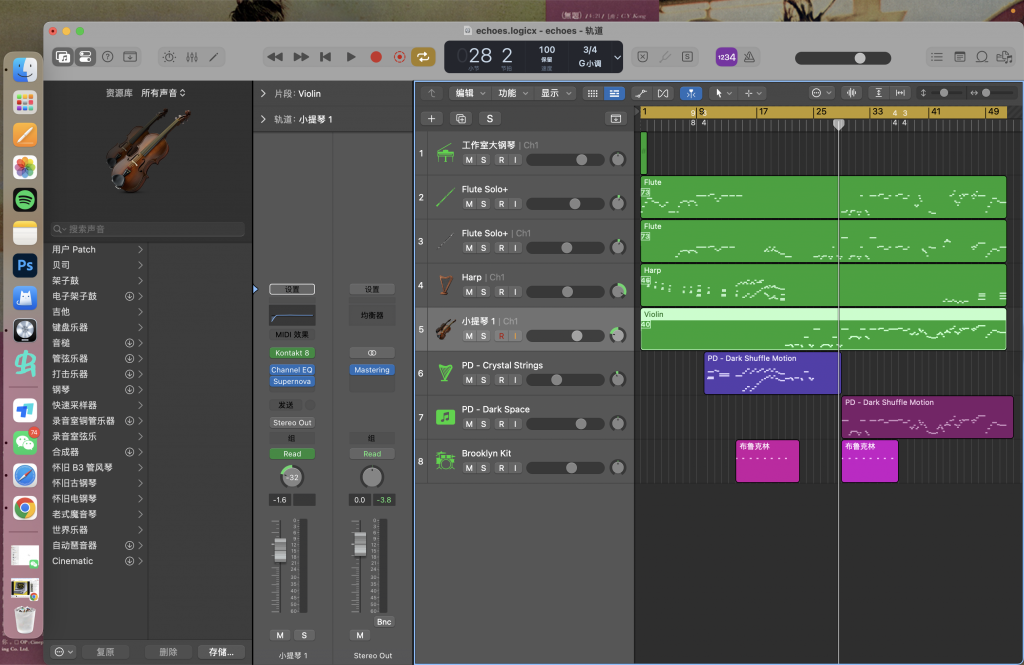
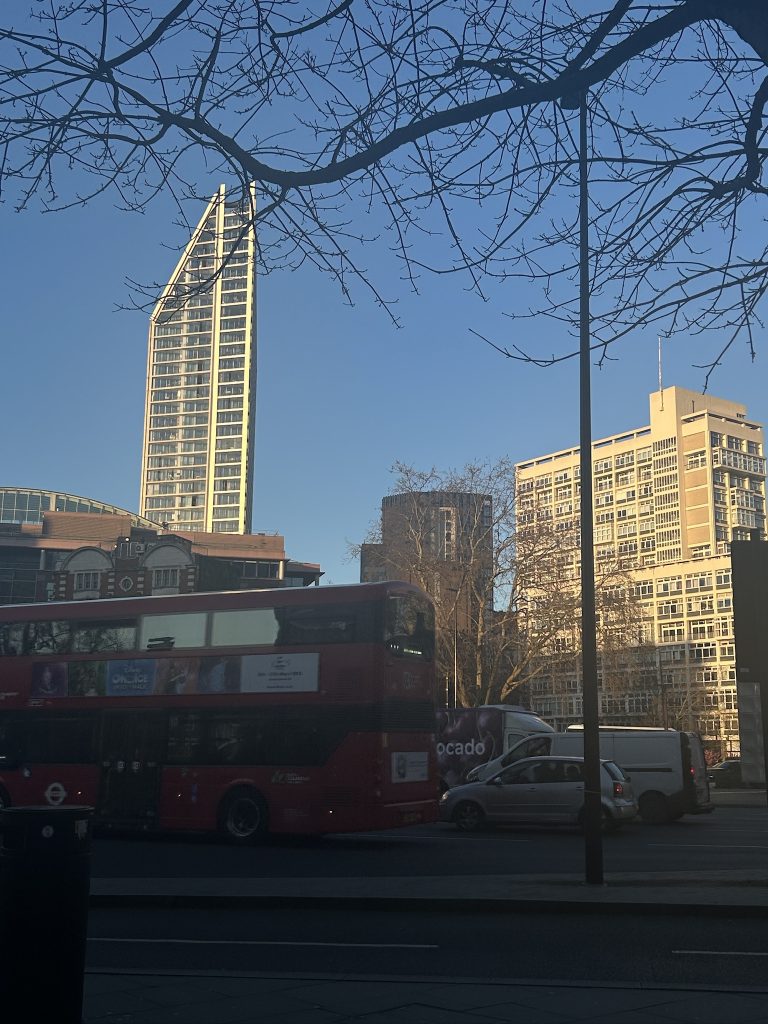
For this “Echoes” project collaboration, Jay and I explored the sonic elements of Elephant Park near LCC. Throughout the process, I felt surrounded by diverse crowds, which evoked a sense of blurred and trance-like emotions. I suggested to Jay that we combine synthesizers with classical music to highlight this interaction between the people and the atmosphere. This idea formed the basis of our composition. Jay was responsible for the classical arrangements, while I handled the synthesizers, mixing, and field recordings.
These are the field recordings I’ve captured—they are very raw and unedited, and I’m still figuring out how to weave these elements together. It will require some experimentation and trial and error. However, throughout this process, I’ve experienced a sensation unlike any other. I’ve come to realize that the city and the crowds can be viewed as separate entities and then reassembled. It’s much like adjusting different instruments and tracks in a DAW; they can perform in unison, or be listened to as solos. It is a profoundly complex emotion.
Jam session and live set
This is my first time jamming with a purely hardware synthesizer setup. It’s been a deeply meaningful experiment for me. Even though I’m not yet fully familiar with the controls and found myself fumbling a bit, the overall sonic thickness was impressive. My approach was to first create a heavy bassline and ambient textures, then gradually introduce the lead and drums, finally layering in the pads and melodies I had crafted. The entire process was fascinating; I wasn’t just creating sounds and music, but also had to strategically think about the timing and placement of each element.
Leave a Reply